Pincel Family: A Warm, Versatile Script Font for Handmade Brands
As someone who designs printable invitations, cuts vinyl stickers for boutique candles, and hand-presses tags for small-batch soaps, I know how much a font can shape the soul of a product. Pincel Family isn’t just another script font—it’s a thoughtful, expressive typeface that feels handmade without sacrificing clarity or commercial polish. Its gentle curves, balanced spacing, and subtle contrast give it that rare blend of personality and professionalism—exactly what my customers respond to when they see a wedding welcome board, a jar label, or a digital planner cover.
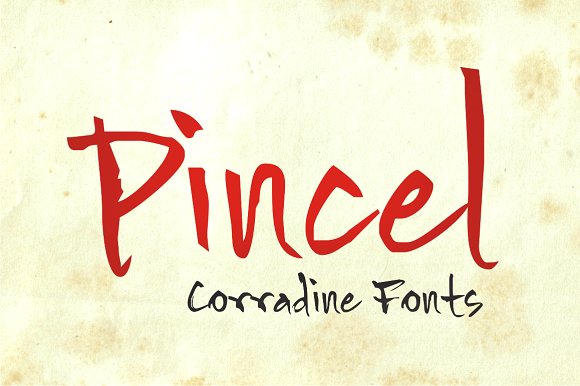
Pincel Family is a Script Handwritten typeface designed with real craft applications in mind. It’s not overly ornate or fragile-looking—no delicate terminals that vanish at 12pt on a sticker, no exaggerated flourishes that confuse cutting machines. Instead, it offers graceful rhythm and consistent stroke weight, making it ideal for both display use and short-form text like names, titles, and product descriptors. Whether you’re layering it in Cricut Design Space or exporting SVG files for Silhouette Studio, Pincel Family holds its shape beautifully—even at smaller sizes (down to 14–16pt for printed tags or 20pt for die-cut vinyl).
I reach for Pincel Family first when designing:
- Candle and soap labels—its softness complements natural ingredients and artisanal branding;
- Wedding stationery suites—especially welcome signs, menu cards, and envelope addressing where warmth matters;
- Seasonal printables—think “Hand-Poured,” “Farmhouse Fresh,” or “Merry & Bright” on holiday tags or gift wrap;
- Digital planner pages and habit trackers—where handwritten charm adds intentionality without sacrificing legibility;
- Boutique packaging—like kraft paper bags with stamped-style text or foil-printed tote bag tags;
- SVG-based wall art—its clean entry and exit strokes cut cleanly on wood, acrylic, or cardstock;
- Mugs and apparel—thanks to its confident x-height and open counters, it prints crisply even on curved surfaces.
What sets Pincel Family apart from other handwritten fonts is how well it balances expression with function. It’s expressive enough to convey care and craftsmanship—but restrained enough that your customer reads “Small-Batch Lavender Honey” instantly, not after squinting. That readability is non-negotiable when your font appears on a 1.5-inch product tag or a social media graphic meant to stop scrollers mid-feed.
For pairing, I almost always combine Pincel Family with a clean sans serif—like Montserrat, Inter, or Lato—for body text, pricing, or fine print. The contrast lets the script shine as a focal point while keeping information grounded and trustworthy. On occasion, I’ll pair it with a quiet serif (think Playfair Display or Cormorant Garamond) for bookish or vintage-inspired stationery—especially for literary-themed invites or poetry printables. The key is letting Pincel Family lead emotionally, then supporting it with structure.
Inside the Pincel Family package, you’ll find multiple weights and styles—likely including regular, bold, and possibly italic variants—plus alternates and ligatures that add nuance without overcomplicating your workflow. Swashes are tastefully included (not overwhelming), giving you options for elegant initials or decorative accents on greeting cards or logo lockups. File formats typically include OTF and TTF, fully compatible with Adobe Creative Suite, Canva Pro, Cricut Design Space, Silhouette Studio, and most major design tools. If multilingual support is included—such as extended Latin characters or accented letters—it’s a quiet win for sellers targeting global markets or bilingual clients.
One thing I always double-check before launching a product: licensing. Pincel Family is a commercial font, meaning it’s cleared for use in physical goods (like mugs, shirts, and printed invitations), digital downloads (PDF planners, Canva templates), SVG cut files, client work, and even resale items—as long as you follow the license terms. That includes embedding in PDFs for sale, using it in mockups for Etsy listings, and applying it to merchandise you manufacture and ship. Just be sure to verify whether the license covers unlimited sales volume or requires an extended license for high-volume production—it’s a quick check that saves headaches later.
In practice, Pincel Family works best for short, impactful phrases—not full paragraphs. Use it for headlines, names, quotes, flavor names (“Vanilla Bean”), collection titles (“Spring Edit”), or brand slogans (“Made With Care”). For longer blocks of text—like ingredient lists or event timelines—pair it with your trusted sans serif or serif companion. This keeps your layout intentional, accessible, and aligned with how people actually read in real life: quickly, contextually, and with emotional cues guiding their attention.
I’ve used Pincel Family on everything from chalkboard-style café menus to gold-foiled baby shower invites—and each time, it subtly elevates perceived value. Customers don’t say, “Oh, nice font,” but they *do* pause, smile, and feel the care behind the object in their hands. That’s the quiet power of great typography: it doesn’t shout, but it resonates. And for makers building brands one label, one card, one mug at a time, resonance is everything.
If you're curating your design assets for consistency across products—or building a cohesive brand identity that feels human, warm, and unmistakably yours—Pincel Family earns its place in your core font stack. Not as a novelty, but as a reliable, expressive, commercially-ready tool that supports your craft, not competes with it.